top of page

multidisciplinary monographic artistic project

Villarejo de Salvanés, Madrid

drawing - models - projection - photography - installation.

May 2011/Aug. 2018

Aunt Juliana's House

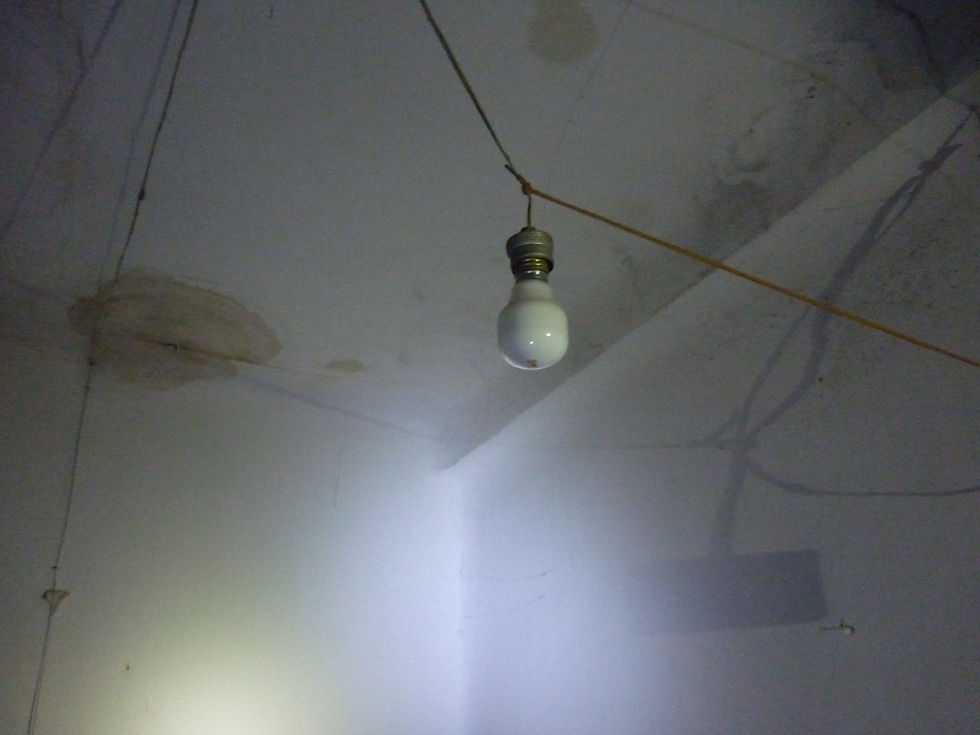
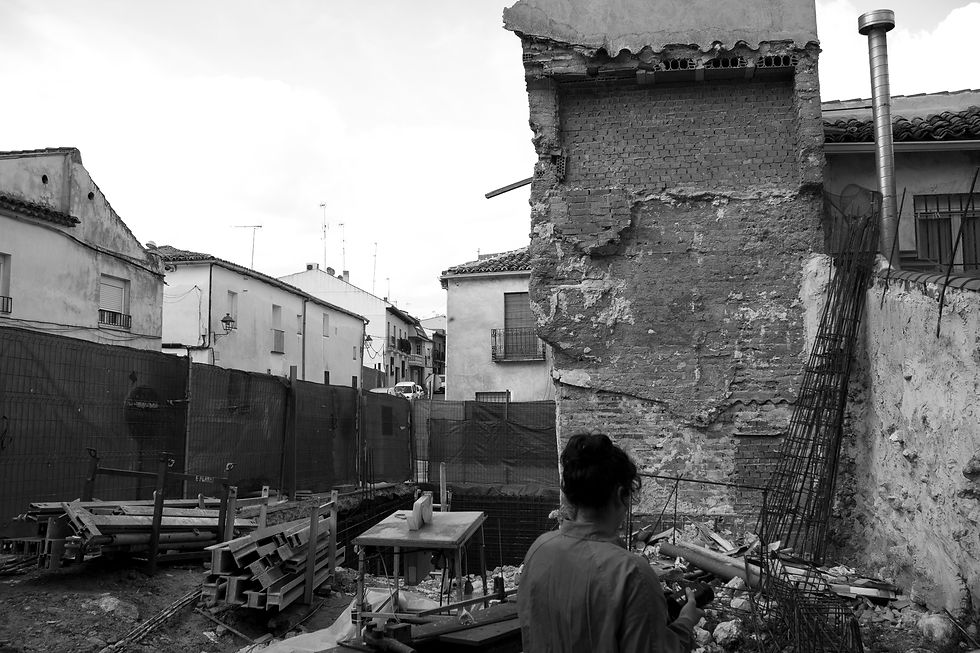
Casa Tía Juliana is a project developed between 2011 and 2018 following the demolition of a family home in Villarejo de Salvanés. The work documents the transition from the house to the site through various forms of recording and intervention.
All houses in which people have lived and died are haunted houses; through the open doors, ghosts wander about with inaudible footsteps. We find them in the entrance hall, on the stairs; they come and go along the corridors, impalpable impressions in the air...[1]
Curatorial text


While not in the same way as spiritualism understands it, a house abandoned after death can certainly be considered haunted. The arrangement of the furniture, the layout of the rooms, the choice of paintings and mementos, the wear and tear on the floors, stairs, doorknobs... all the traces left by a past life form a projection of the soul or souls that lived there and give it an intrinsic character: the home of a specific person and not another, the preferred place for an individual to keep safe from everything they should have kept safe in life. Thus, since humans have settled down, their inner perspective is immutable; they always look out from the same window, just as they always look through the same eyes. It is not madness to equate the house with the body and its inhabitant with the soul, or in other words, to say that as long as it is inhabited, the home has an inner life, its own and essentially private, in direct correlation with the human psyche.

When someone dies, the greatest dignity that can be bestowed upon them is memory; and if in this way a person transcends mind and body, if the abandoned house is the corpse of the human being, a part of them can still be honored as an almost living presence; a well-preserved ruin is like an embalmed body that retains much of the person's spirit in familiar eyes. However, from a demolished house, not only does life escape, but also its ghost, the memory. Memory... and what is the purpose of this capricious need? Why this eagerness to accumulate and preserve as many traces as necessary, even if what they signify is worthy of being remembered? The matter seems simple: if it is worthy, then it is understood that it is appropriate, and not bothersome, to preserve as much of it as possible. However, the matter is truly revealed in other words: there is a fear of forgetting, thus losing the ability to face the future while keeping the past in mind. Just as it sounds. After all, one does not exist without the other; A person without expectations renounces their life, like Ivan Ilyich on his deathbed, and remembers it bitterly, wishing they had been someone else or had lived differently; or conversely, someone without a past, without memories, is suspicious of themselves, doubting they have their own future.[2]

At Aunt Juliana's House (note that the name omits possessives: house and person seem to be one) we have a ruined house, rejected, surrendered to a heavy machine that strips it of meaning, dismembers it, and even, as if the scorn weren't enough before disappearing, shamelessly exposes and scatters its entrails for all to see: a poor Osiris. In short, ashes to ashes, dust to dust. And we are nothing. According to Plutarch, a tenacious Isis gathered and breathed new life into the parts of her consort (although she didn't actually manage to find his parts, joke), leaving tombs wherever a fragment could be found so that it would receive honors and no one would forget;[3] and as my licentious interpretation of the myth and probably of these pages reveals, the most vital part of memory is that it always survives, even when it wants to be destroyed, as long as there is someone who survives its suppression or someone comes along who has the desire to exhume it and lovingly reconstruct it.

[1] Lillian Gish in Mrs. Winchester's House [documentary]. Directed by Dick Williams. USA: KPIX-TV, 1963.
[2] See TOLSTOY, Leo. The Death of Ivan Ilyich. Edition. Place of publication: publisher, year.
[3] PLUTARCH, Moral and Customary Works, (Moralia). VI. Isis and Osiris, Pythian dialogues. Introduction, translation and notes by Francisca Pordomingo Pardo and José Antonio Fernández Delgado. Madrid: Gredos, 1995; p. 93.
Sara Chaparro Olmo
Exhibition curator
Text written on the occasion of the solo exhibition The house is a great cradle , Modus Operandi Gallery, Madrid.
ISBN: 978-84-697-3705-7. Free download at: https://issuu.com/isabelcarralero/docs/sintitulo4definitivo
Year: 2011-2018

Diffusion:
  • The project was exhibited in the solo show "The House Is a Great Cradle" at the Modus Operandi Gallery, Madrid. Dates: Curated by: Sara Chaparro Olmo. A monograph with texts by Sara Chaparro and Isabel Carralero was published in conjunction with the exhibition. ISBN: Publication available for download at:
    Part of the project was exhibited in the group exhibition "Exhibition of Students of the Master's Program in Research in Art and Creation, 2012-13 Academic Year" at the Complutense University of Madrid. Venue: Exhibition Hall of the Faculty of Fine Arts, UCM.
Isabel Carralero © 2022
  • Facebook
  • Twitter
  • YouTube
  • Instagram
bottom of page